
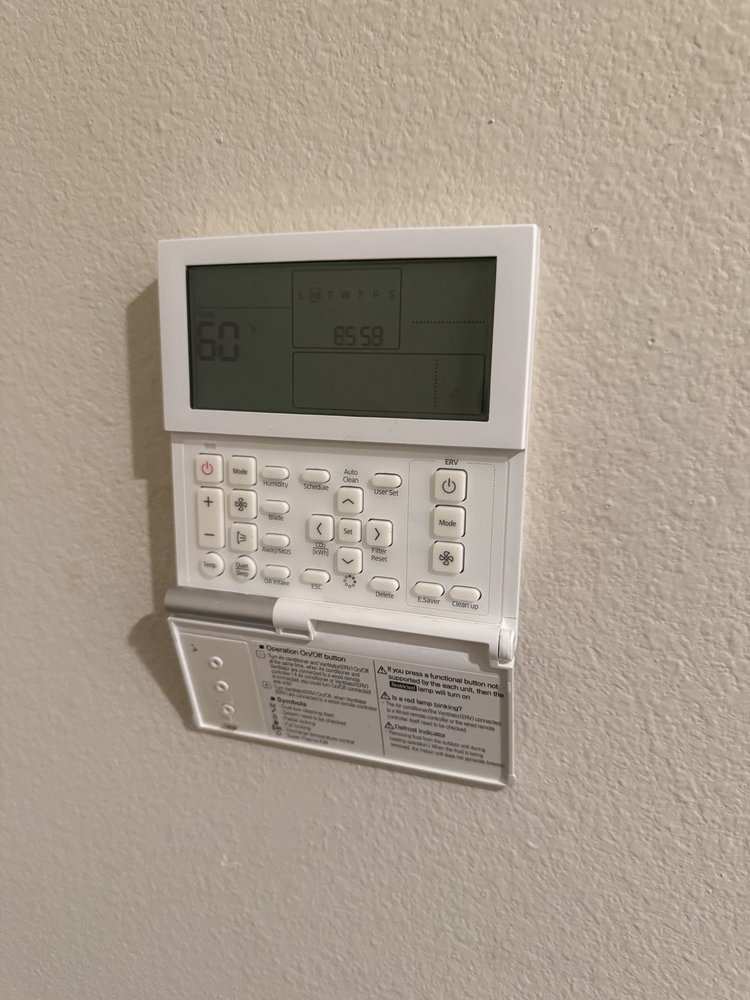
The Tri-Valley runs on a different clock than the rest of the East Bay. Livermore, Pleasanton, Dublin, San Ramon, Danville, and Alamo sit inland, past the hills that block the ocean air, so summers are hot and dry and the cooling season starts earlier and lasts longer. Winters are mild. Most nights don’t get cold enough to work a modern heat pump very hard, and a gas furnace here spends more of the year off than on.
Cooling is the heavy season, so spring is where most of the work happens. Here’s the year, and which parts belong to a tech.
Spring: get ahead of the first heat wave
The first hot stretch of the year is the worst time to find out your system has a problem. Do the spring work while it’s still mild, ideally by April or early May.
What you can do
Start outside. Shut power off at the disconnect box by the condenser, then clear leaves, dirt, and plant growth from around the unit. Check your unit’s manual for the clearance it wants on each side. Bent fins block airflow, and a cheap fin comb straightens them. Don’t use a pressure washer on the coil.
Inside, replace the filter and find the condensate drain, the PVC line that carries water away from the indoor coil, usually to a floor drain or outside. Look for a puddle or stains near the air handler. If your equipment manual allows it, a cup of white vinegar at the access tee keeps growth from building up in the line. If you’re not sure, leave it for the tune-up.
Then run the AC on a mild afternoon for a real cycle. Listen for rattling or grinding. Make sure the outdoor fan spins and the house cools. Check the thermostat’s cooling schedule while you’re at it.
What the spring visit covers
A spring tune-up measures the things you can’t: refrigerant charge, capacitor health, blower and compressor amp draw, static pressure, and drain flow. Refrigerant work requires EPA Section 608 certification. A weak capacitor doesn’t announce itself until the system won’t start on the hottest day. For what a visit includes and what it doesn’t, see what a seasonal HVAC tune-up actually covers.
Summer: airflow and water
Once the system is running every day, it comes down to keeping air moving through it and water moving out of it.
Filter cadence
Check the filter monthly through the cooling season. The usual one-to-three-month interval for a one-inch filter assumes moderate use, and July here isn’t moderate use. Long daily run times, pets, nearby construction, or smoke in the air all shorten the interval. A clogged filter starves the coil of airflow, and that’s how you end up with a frozen coil and a warm house. Our filter change frequency guide goes deeper on the intervals.
Condenser coil
Dust and dry grass collect on the outdoor coil fast in the inland heat. Every few weeks, with power off at the disconnect, look through the fins. If they’re matted, a gentle rinse with a garden hose from the inside out clears most of it. Keep sprinklers off it and don’t stack anything against it. A coil that can’t shed heat makes the compressor work harder, and compressors are the expensive part.
Condensate line
In summer the drain line should be dripping steadily whenever the AC runs. Check the outlet once in a while. If it’s dry during a long cooling run, or there’s water near the air handler, the line is likely blocked. Many systems have a float switch that shuts cooling off when the pan fills, so a system that quits on a hot day with water nearby is often a drain problem, not a compressor problem. Don’t bypass the switch.
Fall: switch sides
Fall in the Tri-Valley is long and pleasant, which is exactly why the heating side gets forgotten. Do this in September or October, before the first cold night.
Furnace check
Replace the filter. Set the thermostat to heat and run it for a few minutes. A brief dusty smell on the first fire is normal; smoke, a persistent odor, or no heat means stop and call. Walk the flue from the furnace to where it leaves the house and look for rust or disconnected sections. Test your carbon monoxide detectors and clear anything combustible from around the furnace. The fall visit handles the rest: combustion analysis, heat exchanger inspection, flame sensor, ignitor, gas pressure, and safety controls.
Heat pump defrost behavior
If you heat with a heat pump, fall is when you’ll first see defrost. In heating mode the outdoor coil gets colder than the outside air, and on a cold, damp morning it frosts over. The system briefly reverses into cooling to melt that frost. The outdoor fan stops, vapor rises off the unit like steam, and the indoor air runs cool for up to about 15 minutes. Then it goes back to heating. That’s by design.
What isn’t normal is defrost running back to back, or ice on the outdoor coil that never clears. A house that won’t reach setpoint on a mild day is another sign. Those point to a defrost control, sensor, or refrigerant problem.
Winter: mild, but not maintenance-free
Tri-Valley winters don’t push a heat pump anywhere near its limit, so winter maintenance is mostly about not creating problems with the thermostat.
Filter and outdoor unit
Keep checking the filter monthly. A heat pump moves air all winter, so the interval doesn’t stretch because the weather cooled off. Clear leaves and standing water away from the outdoor unit, and don’t cover it.
Thermostat schedules
A furnace can drop the house several degrees overnight and recover it in the morning without much penalty. A heat pump can’t do that cheaply. When the thermostat sees a big gap between room and setpoint, it calls for backup heat to close it faster. Keep setbacks to a couple of degrees and let the heat pump run long and steady. If your thermostat has a heat pump mode or a setting that limits auxiliary heat, use it.
When backup heat runs
Backup heat, whether electric strips or a furnace on a dual-fuel system, should be the exception in this climate: during defrost, on the rare cold morning, then gone. If the thermostat shows auxiliary or emergency heat most mornings, or the winter electric bill jumps, look at the schedule first. If the schedule is fine, the heat pump may not be keeping up, and that’s a service call.
The year on one page
- Monthly, all year: check the filter, replace when you can’t see light through it.
- Spring (by early May): clear and inspect the condenser, check the drain, test-run the AC, spring tune-up.
- Summer: monthly filter, coil rinse when matted, confirm the drain is dripping.
- Fall (September to October): filter, test-run the heat, walk the flue, CO detectors, fall tune-up.
- Winter: filter, gentle thermostat setbacks, keep the outdoor unit clear, watch how often backup heat runs.
Where the maintenance plan fits
The two visits on that list are the plan. Our HVAC maintenance plan is $290 per visit, two visits a year: a spring AC check and a fall heating check. Each visit includes a new filter, a full diagnostic, and a system cleaning, and we log the readings so we can compare next year’s numbers against this year’s. On systems we installed, keeping the plan active extends the labor warranty from 2 years to the full 10.
If your system is under four years old and we installed it, we’ll tell you the plan isn’t worth it yet. Commissioning gives a strong baseline and the equipment is well inside its warranty.
For anything that turns up between visits, the $99 diagnostic is credited toward the repair, and you get a written estimate before any work starts. We’re open 7 AM to 7 PM, seven days a week, with Same or Next-Day Service across the Tri-Valley, from Livermore to Alamo. Licensed (CSLB #1136642) and insured. Andrew stands behind every job: the work, the invoice, and the warranty.
Key takeaways
- Inland Tri-Valley summers are hot and winters are mild, so cooling is the heavy season and spring prep matters more than anything else on the calendar.
- Summer is about airflow and water: check the filter monthly, keep the outdoor coil clean and clear, and confirm the condensate line is actually draining.
- A heat pump blowing cool air for a few minutes on a cold morning with vapor off the outdoor unit is defrost, not a failure.
- Big thermostat setbacks in winter push a heat pump into backup heat; gentle schedules keep it on the cheap side of the system.
- Our maintenance plan is $290 per visit, two visits a year (spring AC check, fall heating check), and each visit includes a new filter, a full diagnostic, and a system cleaning.
Related questions
When should I schedule the spring AC tune-up in the Tri-Valley?
How often should I change the filter in summer?
My heat pump blows cool air on cold mornings. Is something wrong?
Why does my thermostat show auxiliary heat in winter?
What does the maintenance plan cost and what does it include?
Need help with your system? Call (925) 999-4095 or book a visit. Repair diagnostics are $99, credited toward the repair. Installation assessments are free.
Further reading
Need HVAC help in the Bay Area?
We serve 56 cities. Same or next day when we can.
Bay Area · 7am–7pm · 7 days · no overtime charges