
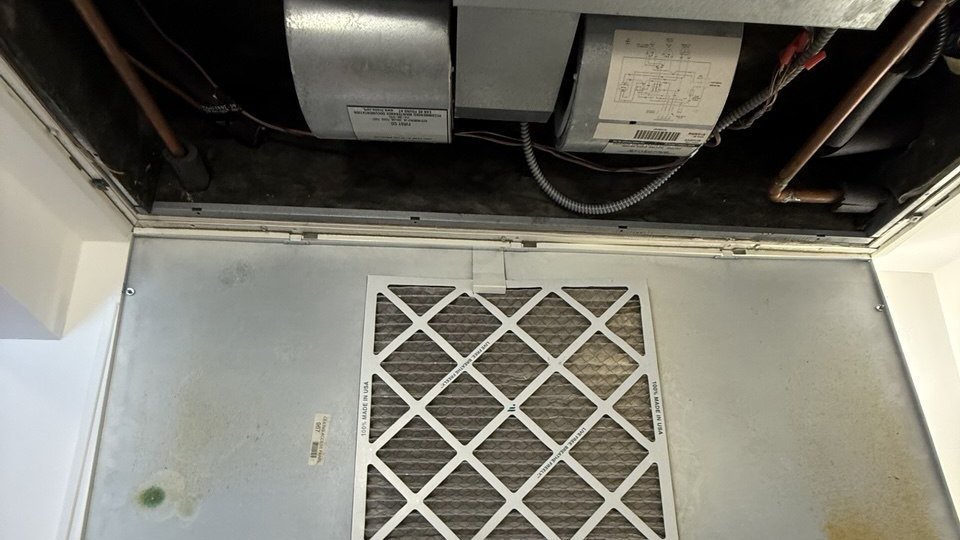
The most common HVAC service call we get from May through August traces back to a dirty filter no one changed in 6 months. Filter changes are the single most effective thing a homeowner can do to keep an HVAC system running well. Here’s the practical version of what to use, when to change it, and what to watch out for.
The honest intervals
Filter recommendations vary by type. Real-world intervals for typical Bay Area homes:
- 1-inch fiberglass (the cheap blue/green ones): 30 to 60 days. They trap less per square inch and clog faster.
- 1-inch pleated (MERV 8 to 11): 60 to 90 days. The default for most homes.
- 4-inch media filter (fits in a dedicated filter rack): 6 to 12 months. Roughly 4 times the surface area of a 1-inch.
- HEPA bypass or whole-home electronic systems: maintenance per manufacturer, usually annual.
These are starting points. Several factors shift intervals shorter:
- Pets shedding knocks 30 to 50 percent off the interval. A pleated filter that lasts 90 days in a no-pet home lasts 60 in a two-dog household.
- Construction or remodeling in the home: change immediately after dust-generating work, then resume normal interval.
- Wildfire smoke season (Bay Area: typically September through November): check weekly during smoke events; replace when visibly darkened. Long-duration smoke events can chew through a 90-day filter in 2 to 3 weeks.
- Rural or roadside homes: dustier intake air shortens filter life by 20 to 40 percent.
- Allergies in the household: change more often (closer to the short end of the range) and use higher MERV.
MERV rating: what to pick
MERV (Minimum Efficiency Reporting Value) measures how small a particle the filter can capture. Higher MERV catches more particles but creates more airflow resistance.
- MERV 6 to 8: basic dust and pollen. Standard for most homes without specific air-quality concerns.
- MERV 11 to 13: captures smaller particles including pet dander, mold spores, and a meaningful share of wildfire smoke. Good if anyone has allergies or asthma. Most modern HVAC systems handle this fine.
- MERV 14 to 16: captures bacteria and fine smoke particles. Requires a system that can handle the extra static pressure drop. Older HVAC systems may not be able to. Confirm before installing.
- MERV 17+ (HEPA): hospital-grade. Not appropriate for standard residential HVAC because the pressure drop is too high; usually installed as a bypass system with its own blower.
Practical Bay Area default: MERV 8 to 11 in 1-inch form, MERV 11 to 13 in 4-inch media. Wildfire smoke season is a strong reason to lean toward MERV 13 in 4-inch.
How to know when to change it
The visual test is reliable. Hold the filter up to a bright light:
- New filter: light passes through evenly.
- Mid-life filter: light passes through but you see some dust pattern.
- Time-to-replace filter: less than 50 percent of the filter surface lets light through, or you see obvious dust caking.
Other signals:
- Airflow at registers feels weaker than last month.
- AC runs longer to reach the thermostat setpoint than it used to.
- Indoor humidity feels off (high in summer, low in winter).
- Dust accumulates faster on furniture.
If you have a smart thermostat, the filter-change reminder is usually based on runtime hours, not real airflow. Trust the visual test over the reminder.
What happens if you don’t change it
Three failure modes, in order of how often we see them:
- System short-cycles: restricted airflow trips the high-pressure safety, the compressor stops, then restarts when pressure equalizes. Repeated short-cycling wears the compressor much faster than normal operation.
- Frozen evaporator coil: low airflow drops coil temperature below the dew point of moisture in the air, ice forms, system loses cooling capacity. Most “AC running but not cooling” calls from May to August are filter-related.
- Compressor failure: long-term low airflow and short-cycling damage builds up. Compressor replacement runs $2,500 to $4,500. A filter is $15 to $40.
What we do during maintenance visits
For homes on our maintenance plan, we replace the filter during each visit (twice yearly), inspect the coil for buildup, and check static pressure. We tag a next-replacement date on the filter so you have a clear marker. We also note any rapid filter loading we see, since that’s usually a clue about something upstream: duct leakage drawing in attic dust, return register placement issues, or pet patterns we can sometimes address.
Related reading
- Why is my AC freezing up? Five causes and what to do first
- Repair or replace your HVAC, how I decide on the job
Key takeaways
- 1-inch fiberglass: 30 to 60 days. 1-inch pleated: 60 to 90 days. 4-inch media: 6 to 12 months.
- Pet households and homes near construction or rural roads burn through filters faster.
- Bay Area wildfire smoke (typically September through November) shortens filter life sharply.
- MERV rating matters: MERV 8 is good for most homes; MERV 11 to 13 if you have allergies; over MERV 13 only if the blower can handle the pressure drop.
- Dirty filters are the single most common cause of HVAC service calls. Check first before scheduling anything else.
Related questions
What happens if I don't change my filter?
How do I know when to change it?
What MERV rating should I use?
Do thicker filters last longer?
Are washable/permanent filters worth it?
Need help with your system? Call (925) 999-4095 or book a visit. Repair diagnostics are $99, credited toward the repair. Installation assessments are free.
Further reading
Need HVAC help in the Bay Area?
We serve 56 cities. Same or next day when we can.
Bay Area · 7am–7pm · 7 days · no overtime charges