
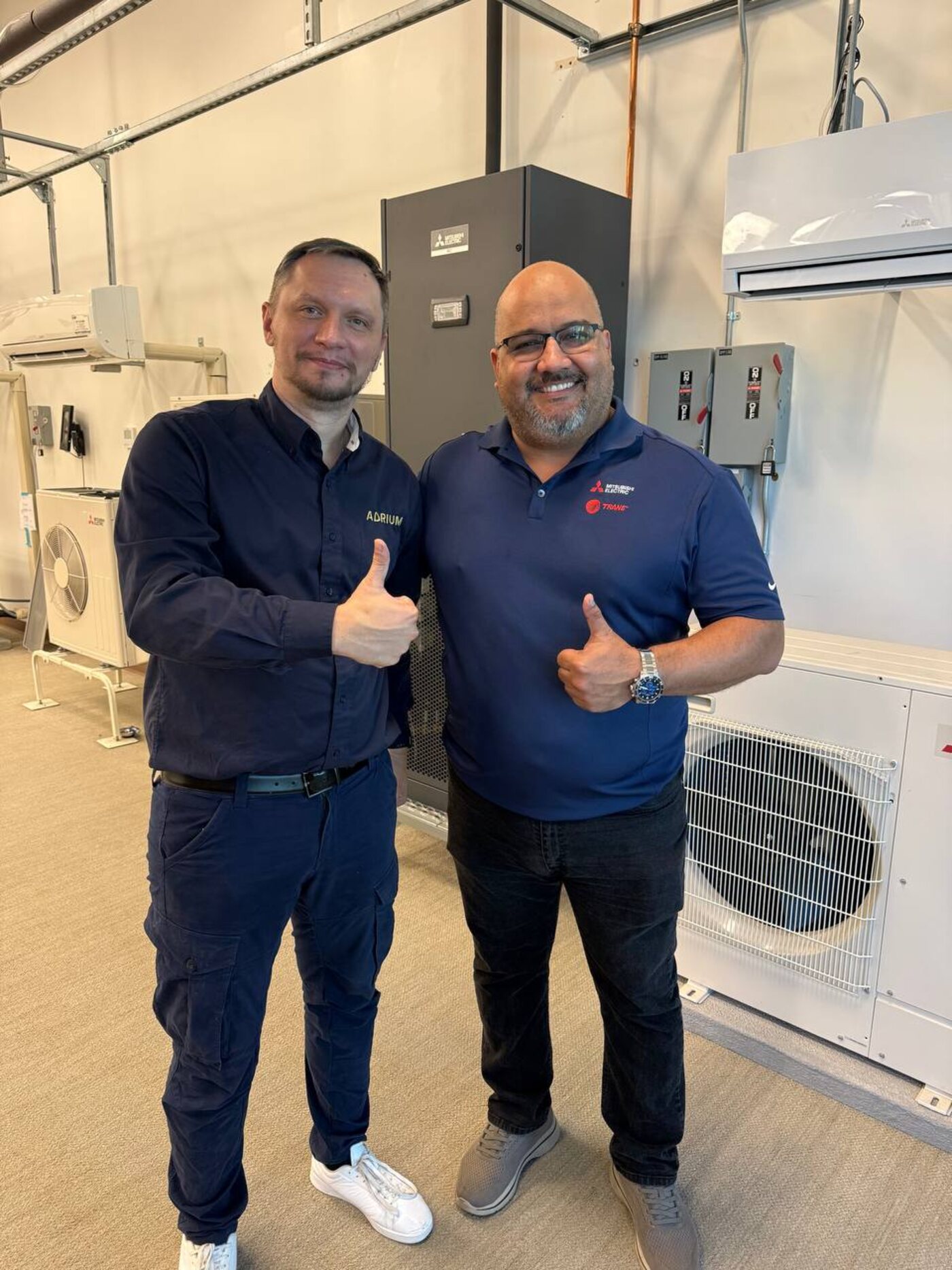
Here’s something odd about the Tri-Valley HVAC market: nobody talks about Mitsubishi in plain terms. The dealer-locked shops can’t, because their agreements point them at one brand, and it isn’t this one. So homeowners in San Ramon or Danville who’ve heard good things about Mitsubishi end up piecing together forum posts. This is the article I wish existed when customers first started asking me about it.
I’m Andrew, I run Bay Area HVAC Service out of San Ramon, and we’re factory-trained on Mitsubishi M- and P-Series, with certificates from 2026. One thing up front, because I’d rather you hear it from me: we are not a Mitsubishi Diamond Contractor. That’s a real program, we’re working toward it, and we won’t claim it before we’ve earned it.
Why Mitsubishi in this valley specifically
The Tri-Valley climate asks two different things of a heat pump. Summers are long and genuinely hot, Livermore clears 100 most years, so the cooling side does real work for months. Winters are mild on paper, but anyone who’s woken up in the hills above Danville or San Ramon in January knows the mornings bite.
Mitsubishi’s answer to both is the same piece of hardware: the inverter compressor. Instead of running full blast or not at all, it varies its speed to match what the house needs. Through a July afternoon that means long, steady, quiet cycles that actually pull humidity instead of the on-off slamming you get from single-stage equipment. On a cold morning it means the system leans into the work rather than fading out.
Then there’s H2i, Mitsubishi’s Hyper-Heating line. I wrote a full piece on what H2i does and why it holds up in the cold, but the short version: it’s engineered to keep producing heat as outdoor temperatures drop, instead of quitting and leaning on electric backup strips that run your bill up. On the valley floor in Dublin or Pleasanton, standard equipment handles our winters fine. Up in the hills, or if you just hate that weak-lukewarm-air feeling on the coldest mornings, H2i is the reason to look at this brand over a basic unit.
What a Mitsubishi install actually includes
Most complaints I hear about underperforming heat pumps trace back to the install, not the equipment. Here’s what a proper one looks like, and what we do on every job:
Load calculation first. A Manual J on your actual address, not a tonnage guess off square footage. This matters more in the Tri-Valley than most places because the design temperatures are different from the coastal Bay Area numbers a lot of installers default to. An undersized system spec’d off a milder average is the most common failure we see in Livermore.
Panel check before anything is ordered. Plenty of 1970s and 80s tract homes in the valley have panels that can’t take a heat pump circuit as-is. We assess that at the estimate and put any sub-panel work on the written estimate, coordinated with a licensed electrician under the same project. You see the whole number before you decide, not after the equipment is on order.
Configuration matched to the house. Mitsubishi builds single-zone wall units, MXZ multi-zone systems that run several rooms off one outdoor unit, ceiling cassettes, and concealed-duct air handlers that tie into existing ductwork. A Blackhawk custom home with dual-zone ducting and a downtown Pleasanton house with plaster walls and no ducts are completely different jobs, and the equipment list should reflect that.
The unglamorous parts done right. Permit pulled, line set vacuumed and leak-tested before any refrigerant goes in, system commissioned against the factory spec, old equipment hauled off, rebate paperwork filed. This is the boring 40% of the job that decides whether the system runs right for 15 years.
Timeline: a single-zone ductless install usually finishes in one day. A like-for-like ducted replacement is one to two days on site. A whole-home conversion with electrical or duct work runs two to four days, and permits add one to three weeks of lead time depending on the city.
City by city
The valley isn’t uniform, and the install conversation changes town by town:
- San Ramon is our home base, so it’s where we respond fastest. The 1980s–90s tract homes are the classic conversion candidates, and San Ramon is MCE territory, so the MCE rebate paperwork goes in with the permit on qualifying jobs.
- Danville splits between older ranches on Diablo Road with tight crawl spaces and the Blackhawk estates where Mitsubishi’s multi-zone gear genuinely shines. Also MCE territory.
- Dublin skews newer. The usual question there is right-sizing, since a lot of those homes carry more tonnage than the load calls for. Dublin sits with Ava Community Energy, not MCE.
- Pleasanton has the widest spread: historic downtown homes with no ductwork (ductless territory), 1960s–80s tracts, and Ruby Hill multi-zone customs. Ava territory as well.
- Livermore is the stress test. When it’s 104 out, the equipment either holds its rated capacity or it doesn’t. Sizing to the real inland design temperature is the whole job there.
Rebates, honestly
The rebate picture in 2026 is smaller than it was two years ago, and some contractors’ websites haven’t caught up. Federal 25C died December 31, 2025. TECH Clean California has been on waitlist since November 2025. What’s actually in play for a Tri-Valley Mitsubishi install: MCE’s heat pump rebate in San Ramon and Danville, Ava Community Energy programs in the Alameda County cities, PG&E’s thermostat rebate, BayREN Home+ when a cycle is funded, and Mitsubishi distributor promos when they run. Amounts move every cycle, so we verify what’s paying at the estimate instead of quoting a stack we can’t deliver. The full picture is in our California heat pump rebates guide.
Where to start
If you’re weighing a Mitsubishi system, the useful first step isn’t a phone quote, it’s a load calculation and a panel check at your house. The in-home installation estimate is free, the findings go in writing the same day, and if your situation is one where another brand or even a plain repair makes more sense, I’ll tell you that. Call (925) 999-4095 or start from the heat pump service page.
Key takeaways
- Mitsubishi's H2i Hyper-Heating line keeps delivering heat as outdoor temperatures fall, which matters most on cold Tri-Valley mornings and in the hills above San Ramon and Danville.
- A proper Mitsubishi install includes a Manual J load calculation, panel check, permit, vacuum and leak test on the line set, commissioning, and rebate paperwork. Skipping any of those is how these systems get a bad name.
- We are factory-trained on Mitsubishi M- and P-Series (certificates 2026). We are not a Diamond Contractor and won't claim to be.
- Most single-zone installs finish in one day. A whole-home conversion runs two to four days on site, plus permit lead time.
- The in-home installation estimate is free. Rebate eligibility (MCE, Ava, PG&E, BayREN Home+) depends on your address and the current cycle, and we verify it on every estimate.
Related questions
Why choose Mitsubishi for a Tri-Valley heat pump?
Are you a Mitsubishi Diamond Contractor?
How long does a Mitsubishi heat pump install take?
What does the install include?
Which rebates apply to a Mitsubishi heat pump in the Tri-Valley?
Need help with your system? Call (925) 999-4095 or book a visit. Repair diagnostics are $99, credited toward the repair. Installation assessments are free.
Further reading
Need HVAC help in the Bay Area?
We serve 56 cities. Same or next day when we can.
Bay Area · 7am–7pm · 7 days · no overtime charges