Every HVAC company’s website has a footer with a license number and a row of badges. Most homeowners scroll past it, and that’s fair, because nobody explains what the badges do. So here’s the plain version of ours: what each one covers, what it doesn’t, and how you check it without taking our word for anything.
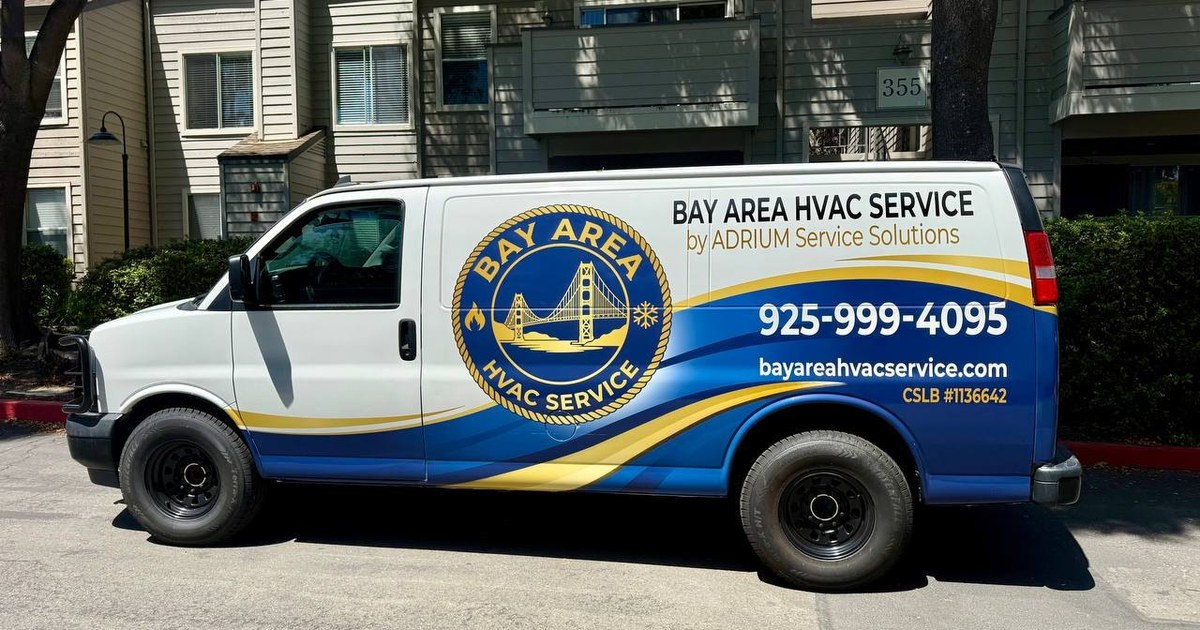
The state contractor license: CSLB #1136642
This is the one that matters most, and it’s the easiest to verify.
Our license is issued by the California Contractors State License Board and carries the classification the state requires for HVAC work. In California, HVAC work is not something you can legally do on a handshake. Replacing a furnace, installing a heat pump, running new ductwork, setting a condenser: all of it requires a licensed contractor, and the license has to carry the right classification. A general handyman doesn’t qualify. A plumbing license doesn’t cover it either.
What the classification means in practice: the licensee passed a trade exam and a law-and-business exam, has a contractor bond on file, and is on record with the state for workers’ compensation. It also means we pull the mechanical permit for your job under our own license, which matters more than people think. A permitted install gets inspected and shows up in the city’s records when you sell the house. It also keeps the manufacturer’s equipment warranty clean. Unpermitted installs are usually unlicensed installs, because an unlicensed crew can’t pull the permit in the first place.
It’s been in good standing since 2021. To check it, go to cslb.ca.gov, click Check a License, and enter 1136642. The record shows the classification, whether the license is active, the bond, the workers’ comp status, and any complaints or disciplinary history. It takes about a minute. Do this for every contractor who bids on your job, not just us.
EPA Section 608, Universal
Refrigerant is the part of an AC or heat pump that does the cooling and heating. Federal law, Section 608 of the Clean Air Act, says anyone who opens a refrigerant circuit, recovers refrigerant, or charges a system has to hold an EPA 608 certification.
The certification comes in types. Type I covers small sealed appliances. Type II covers high-pressure systems, which is nearly all residential AC and heat pumps. Type III covers low-pressure chillers. Universal means all three. Ours is Universal, certificate #1279674151528.
Why you should care: almost every AC or heat pump repair that matters touches the refrigerant circuit, whether that’s diagnosing a low charge, finding a leak, replacing a coil or a compressor, or commissioning a new system. A tech without 608 either isn’t doing that work, or is doing it illegally and venting refrigerant into your side yard.
Checking this one means asking to see the card. It’s a wallet card, and the tech can show it on site. The EPA doesn’t run a public lookup for these numbers, so the card is the proof.
HC(A3) & HFO(A2L) certified technician
This one is newer, and most homeowners haven’t heard of it, so here’s the background.
The refrigerant that ran residential AC for the past twenty years, R-410A, is being phased down because of its global warming potential. New heat pumps and AC systems now ship with low-GWP replacements, mainly R-454B and R-32. These are classed A2L: mildly flammable. Not propane-in-a-tank flammable, but flammable enough that the handling rules changed. Leak detection, ventilation while you work, which recovery machines and vacuum pumps are allowed, how you braze near a charged line, where the indoor equipment can sit in a house. A3 refrigerants like R-290 (propane itself) go a step further and are showing up in some newer equipment.
Our HC(A3) & HFO(A2L) refrigerant safety training is through Mainstream Engineering. It’s the reason we’re comfortable installing and servicing the current generation of heat pumps, which is most of what’s on our heat pump page. If you’re getting bids on a new system this year, ask each bidder whether they’ve been through A2L training, because the equipment they’re quoting almost certainly uses it.
Same deal for checking this one: ask for the certificate, and we’ll show it on site, like the EPA card.
Factory-trained on Daikin and Mitsubishi
Factory training means the manufacturer trained us on their equipment, using their procedures. It’s not the same as “we’ve installed a lot of them,” and it’s not a dealer or sales relationship. We repair and install. We’re not a storefront for either brand.
Where this shows up on your job is the inverter and communicating systems both brands build now. These aren’t the old single-stage units where a multimeter and a gauge set tell you everything. Now it’s fault codes, board-level diagnostics, refrigerant piping rules for multi-head ductless systems, and commissioning steps that have to be done in the manufacturer’s order or the warranty claim gets questioned. Training on the equipment itself shortens the diagnosis and keeps the warranty paperwork in order.
The check here is just to ask. We’ll tell you which training we’ve completed for the brand you’re considering, and we’ll say plainly if a brand you ask about isn’t one we’re factory-trained on. There are plenty of good systems we service as an independent contractor without a factory program behind us, and we’d rather say that than let you assume otherwise.
BBB A+ and the Pleasanton Chamber
Two more that people ask about, both easy to check.
The Better Business Bureau rates us A+. The rating comes from complaint history and how complaints get resolved, plus how open the business is about itself. It isn’t a quality-of-work score, and we don’t treat it as one, but a low grade or a pile of unanswered complaints is a real warning sign. Search bbb.org for Bay Area HVAC Service. The profile is listed under our legal name, ADRIUM Service Solutions, doing business as Bay Area HVAC Service.
We’re also members of the Pleasanton Chamber of Commerce. A chamber membership says nothing about how we braze a line set. What it does say is that we’re a real local business with an address and neighbors who can find us. The Chamber ran a Business Spotlight on us in May 2026, and it’s on our press page if you want to read it.
What none of this tells you
A license and a stack of certifications are the floor, not the ceiling. They tell you the contractor is legal and trained, and that there’s a regulator to complain to. They don’t tell you whether the line set will be vacuumed to spec or whether someone will call you back when a part is late. For that, read the warranty language in the contract and ask how the company handles a callback. Then go look at the work.
But the floor matters. The reason we put the numbers on the site instead of just the logos is so you can check them. If a contractor bidding your job won’t give you a license number, or gives you one that comes back suspended or under someone else’s name, that’s the whole answer.
Full background on the company, including who’s on the crew, is on our about page. What we work on is laid out under services. And if a system is acting up right now, a $99 diagnostic visit puts a licensed, 608-certified tech in front of it. Andrew stands behind every job: the work, the invoice, and the warranty.
Key takeaways
- Our contractor license, CSLB #1136642, carries the classification the state requires for HVAC work, and anyone can check its status at cslb.ca.gov in about a minute.
- EPA Section 608 Universal certification is the federal requirement for handling refrigerant, which nearly every AC and heat pump repair involves.
- HC(A3) & HFO(A2L) training covers the mildly flammable low-GWP refrigerants that new heat pumps and AC systems now ship with.
- Factory-trained on Daikin and Mitsubishi means trained by the manufacturer on their equipment, not a dealer or sales relationship.
- BBB A+ and Pleasanton Chamber membership are both public and checkable; neither one is a substitute for reading the contract.
Related questions
How do I check a California HVAC contractor's license?
What does EPA Section 608 Universal certification cover?
Why does A2L refrigerant training matter for a new heat pump?
Does factory-trained mean you're a Daikin or Mitsubishi dealer?
Can I see your certifications before you come out?
Need help with your system? Call (925) 999-4095 or book a visit. Repair diagnostics are $99, credited toward the repair. Installation assessments are free.
Further reading
Need HVAC help in the Bay Area?
We serve 56 cities. Same or next day when we can.
Bay Area · 7am–7pm · 7 days · no overtime charges