Equipment
- Multiple sections of damaged duct repaired and re-supported
- Failed joints resealed with mastic
- Deteriorated sections replaced
- New R-8 insulation on repaired runs
- Full system pressure test post-repair
What the customer reported
A Walnut Creek homeowner had been living with uneven heating and cooling, front rooms comfortable, back rooms perpetually cold in winter and warm in summer, regardless of where the thermostat was set. The HVAC equipment itself was relatively new and working correctly, so we suspected the problem wasn’t the equipment.
What we found
The HVAC unit was fine. The crawl space was the problem.
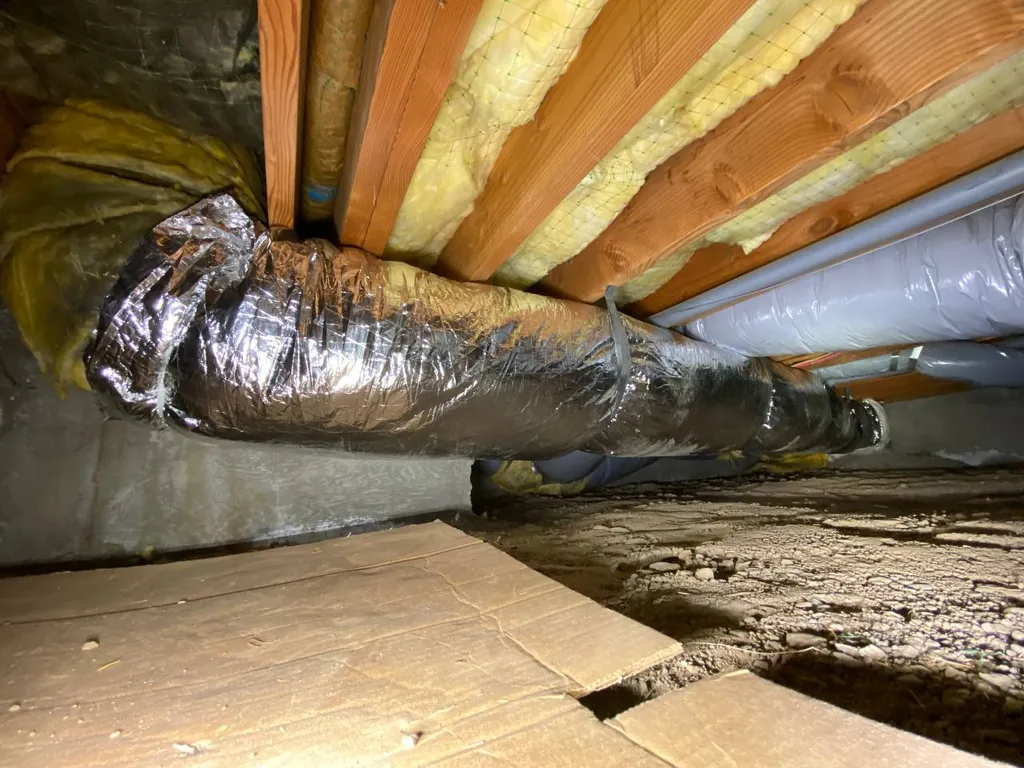
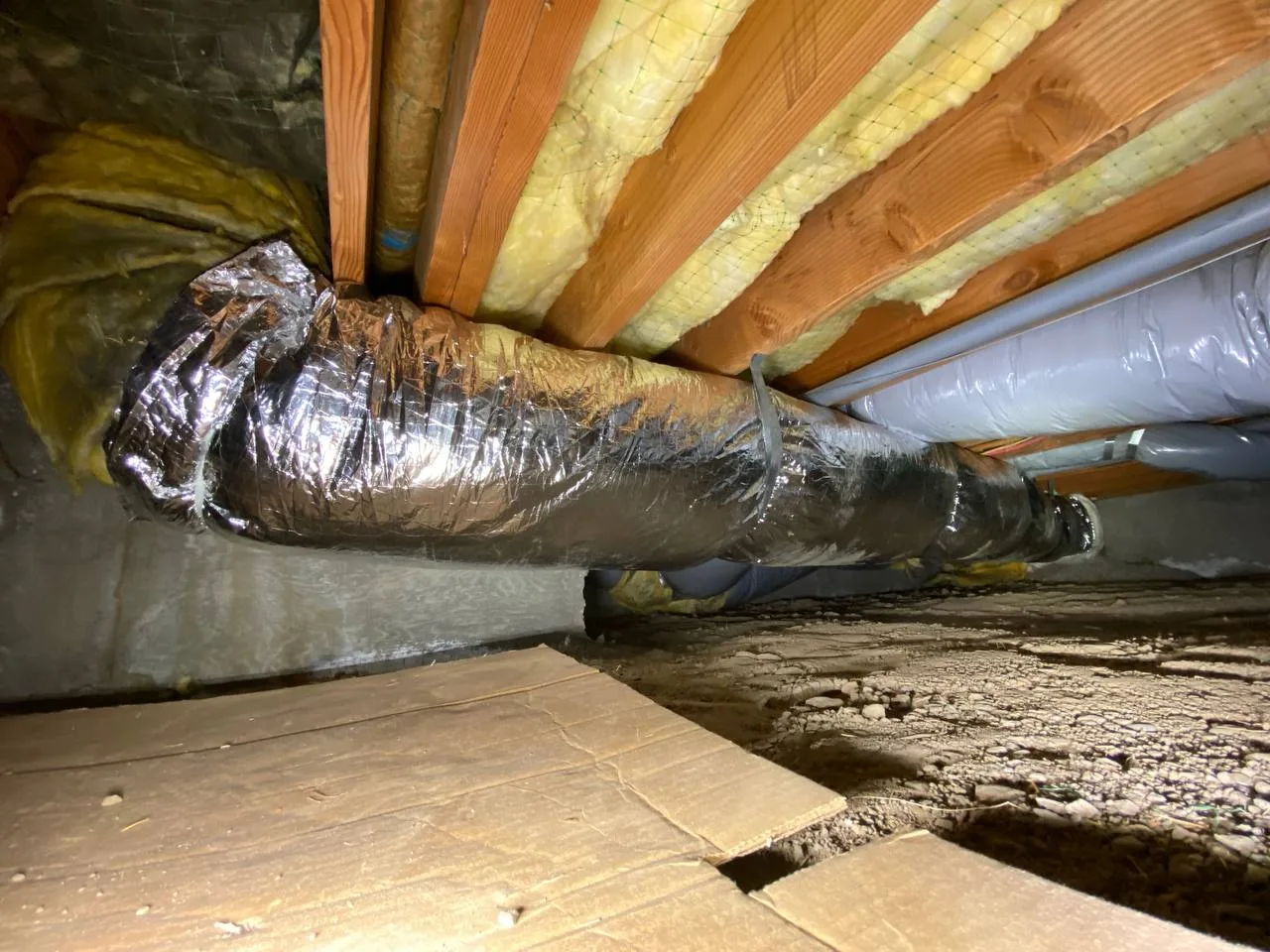
When we went under the house, we found several duct sections that had pulled apart at the joints, others that had sagged enough to crimp airflow, and at least two sections where the flex duct had torn outright. The system was running but dumping conditioned air into the crawl space instead of delivering it to the back rooms. The static pressure was wrong, the airflow was unbalanced, and the energy bill was paying to heat dirt.
This is the most common cause of “the HVAC isn’t working right” that turns out not to be the HVAC. Crawl space ductwork is the part of the system nobody ever inspects, it’s invisible until you crawl under there with a flashlight.
What we did
- Mapped every duct run end-to-end against the equipment outputs
- Repaired and re-supported the disconnected and sagging sections
- Resealed every joint we touched with HVAC-grade mastic (not duct tape, duct tape fails in 18 months, mastic lasts 20+ years)
- Replaced sections where the duct material itself had deteriorated past the point of patching
- Installed fresh R-8 insulation on the repaired runs to prevent thermal loss in the crawl space
- Pressure-tested the system after the work to confirm balanced airflow at every register
The detail that mattered
Most HVAC contractors will quote a new system before they’ll quote a ductwork repair. A new system is a much bigger ticket. But if your ducts are leaking 30%, a new high-efficiency system will leak 30% too, you spent $15,000 to keep the same comfort problem you started with. Always rule out duct integrity before going to equipment replacement. The duct repair on this job cost a fraction of what a new system would have, and it solved the actual problem.
What the homeowner got
Consistent airflow at every register, even temperature distribution room-to-room, lower energy bills (the homeowner reported a noticeable drop in the next month’s PG&E statement), and a duct system that should hold for the remaining service life of the equipment. Repair covered under our 1-year warranty.
The photos below show the damaged and sagging sections we found in the crawl space before the repair work began.
Photos