Equipment
- Two Carrier 19 SEER heat pumps (3-ton + 4-ton)
- Matched indoor air handlers
- New refrigerant linesets (R-410A)
- Google Nest 4th-generation thermostats (two zones)
- New condenser pads + line-set covers
- Updated electrical disconnects + surge protection
The starting situation
The homeowner had just bought the place and inherited two aging central air conditioners, one serving the downstairs zone, a second handling the upstairs. Both were single-stage units running on R-22, both well past the point where parts replacement made financial sense. PG&E summer bills had been creeping up year over year and the upstairs unit had started short-cycling on hot afternoons. They called for a quote on replacing the AC and asked what we thought about going further.
We walked them through the math on heat pumps. The two-zone layout was already set up for parallel equipment, so we wouldn’t have to re-engineer the duct system. A right-sized heat pump also covers both heating and cooling off one system, which drops operating cost against two aging single-stage condensers plus a separate furnace. Where utility rebates apply, we confirm what is actually paying when we write the estimate.
What we installed
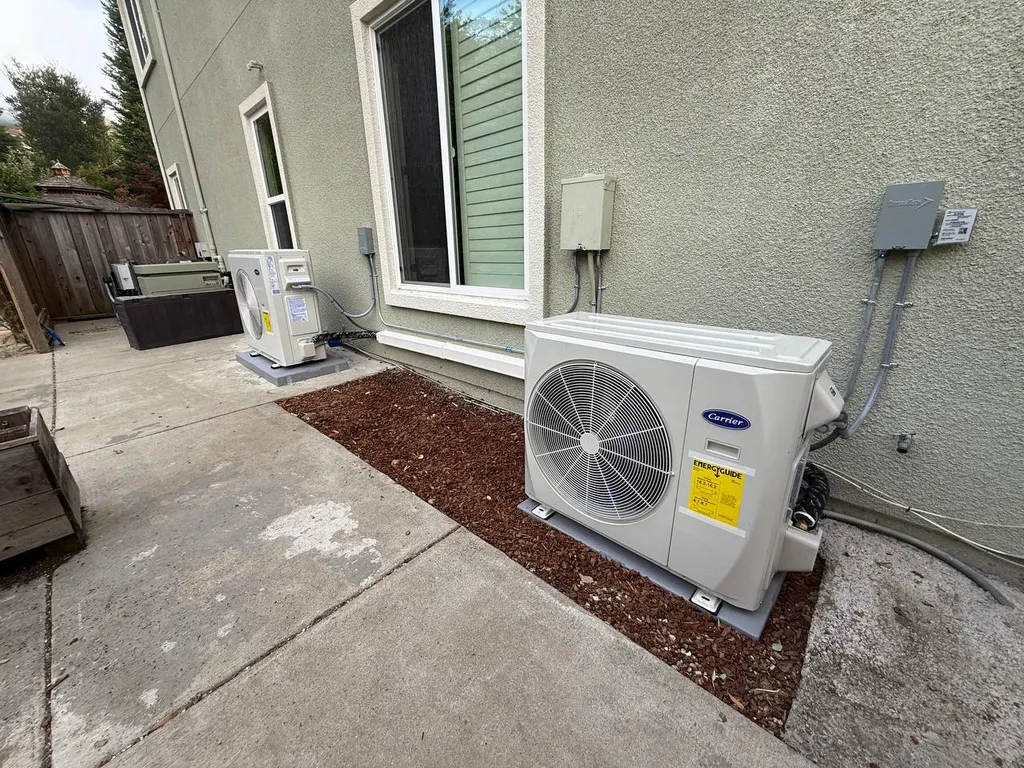
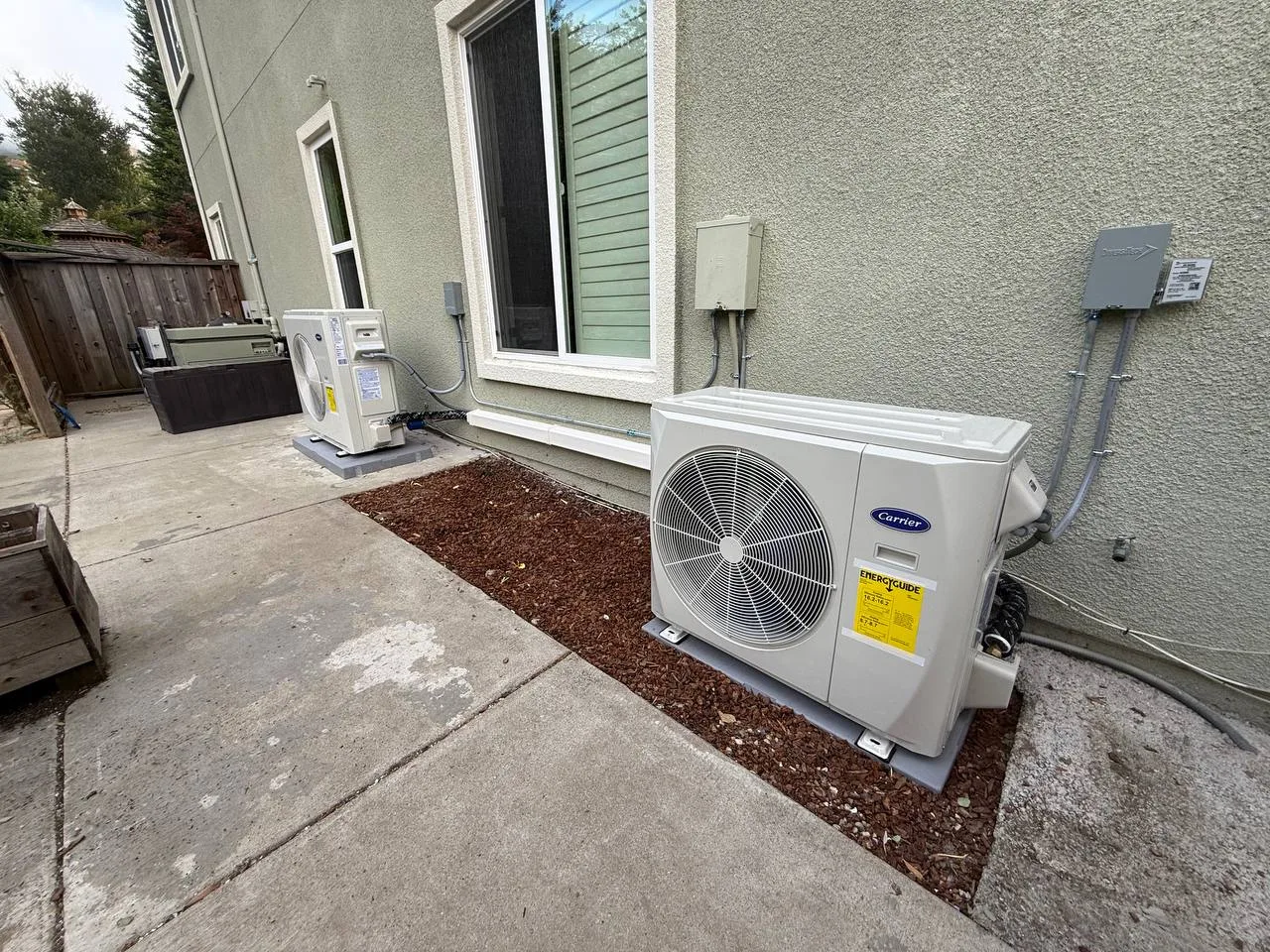
- Two Carrier Infinity-series heat pumps: a 3-ton serving the downstairs zone, a 4-ton serving the upstairs.
- Matched indoor air handlers for each system, factory-charged on R-410A
- New refrigerant linesets: the old R-22 copper wasn’t worth pressure-testing for a thirty-year service life and you can’t legally top off R-22 anyway
- Two Google Nest 4th-generation thermostats: one per zone, heat-pump-aware staging configured at install so the system doesn’t crank resistance backup on mild evenings
- New composite condenser pads for both outdoor units, set level on compacted gravel
- Line-set covers on the outdoor refrigerant runs (the original copper had been left bare and was looking ugly against the stucco)
- Updated electrical disconnects with surge protection on the high-voltage side of each condenser
The detail that mattered
Two-system installs look like “do one, do the other,” but they’re not. The disconnects, the refrigerant lines, and the thermostat wiring for both systems share the same chase through the wall, touch one and you’re inside both. We staged it so that both old units came out the same morning, both new condensers went in on new pads by afternoon, and we did the lineset + electrical work as a single coordinated pass rather than two separate trips. That cut the customer’s no-AC window from a likely two days down to a single afternoon, and it kept the wall openings to one cycle of open-and-close instead of two.
If you’re getting bids on a multi-system install, ask whether the work is staged as one coordinated job or as two separate visits. The difference shows up in the wall finish and in how long you’re without cooling.
What the homeowner got
Both systems powered up the same evening, configured for heat-pump-priority operation with the Nest controllers. First summer test was the following week, temperatures hit the high 90s and both zones held setpoint without either unit having to stage up to its top compressor speed. That’s what you want to see: the system is sized comfortably for the load, not stretched.
Equipment covered under our 10-year parts warranty plus a labor warranty (2 years standard, extended to 10 years with our maintenance plan) on our installation, subject to your contract terms, plus the Carrier factory equipment warranty. Where utility rebates apply, we confirm what is actually paying at estimate time.
The photos below show the finished outdoor condensers, the refrigerant-line work as we ran it, and the old AC units that came out at the start of the day.
Before


After