The phrase we hear most when a multi-zone furnace is in trouble: “Some rooms are hot, some rooms are cold, the furnace is broken.”
The furnace is usually fine. Multi-zone systems fail at the zone-control side first: zone valves, blower motor running out of spec, loose thermostat connections, miscalibrated control board. The diagnostic is what separates a $200 part from a $5,000 replacement.
How multi-zone systems work
A multi-zone furnace uses one piece of heating equipment to serve multiple thermostat-controlled areas of the home. The system has:
- One furnace producing the heated air
- One blower moving that air through the ducts
- Multiple zones: each with its own thermostat and (usually) motorized dampers that open/close to direct airflow
- A zone control panel that coordinates everything: when zone 1’s thermostat calls for heat, the panel opens zone 1’s damper, closes zones 2 and 3’s dampers, starts the burner, runs the blower
When this works correctly, you get independent temperature control per zone with a single piece of equipment. When something fails, the symptoms look like a furnace problem but the cause is usually elsewhere.
Start here before calling
A few things you can check without tools:
- Thermostat settings: confirm the affected zone’s thermostat is set to heat and the target temperature is above the current room temp
- Filter: a clogged filter starves all zones of airflow; pull it and check
- Breaker: confirm the furnace breaker hasn’t tripped at the panel
- Registers: make sure supply and return vents in the problem zone aren’t blocked by furniture or closed manually
If those check out and the problem persists, the next steps need a tech.
The four most common failure modes
1. Failed zone valve (or stuck damper)
Symptom: one specific zone never gets heat. The other zones work normally. The furnace runs. The blower runs.
The motorized damper or zone valve serving that zone is stuck closed. Air can’t get through. The thermostat keeps calling for heat, the furnace keeps cycling, and that zone never warms up.
A tech will test each damper actuator directly, confirm the zone control panel is sending the right command, and replace the failed component. The hardware itself is inexpensive; labor depends on how accessible the unit is in the ductwork.
2. Unstable blower motor
Symptom: irregular blower noise (rumble, vibration, occasional clatter), and the system shuts off unexpectedly across all zones.
Blower bearing wearing out, blower wheel imbalanced by debris, or the motor losing capacity can all cause the system’s safety controls to trip when airflow drops or the motor draws too much current.
A tech will measure current draw, check airflow at the supply registers, and inspect the wheel. If the bearings are gone, the motor needs to come out. Ignored, a failing blower eventually seizes, and the repair cost climbs significantly.
3. Loose thermostat connections
Symptom: one zone misbehaves intermittently. The thermostat shows the right setting but the system doesn’t respond consistently to that zone’s calls.
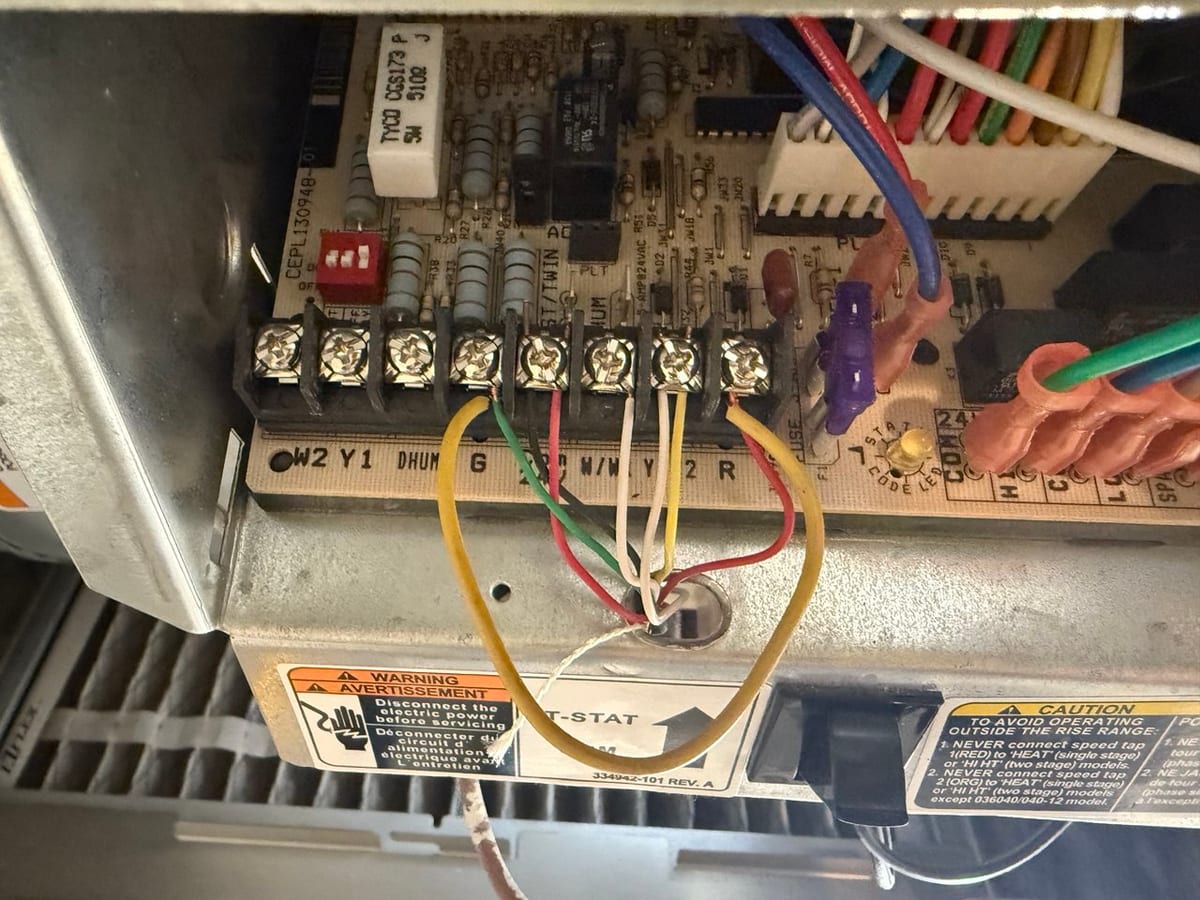
The 24V control wires at the zone control panel have worked loose over years of normal expansion and contraction. The connection is intermittent. It’s a quick fix once found, but diagnosing it requires checking the panel wiring, not just the thermostat itself.
4. Failed control board
Symptom: erratic behavior across multiple zones. Settings don’t seem to “take.” Zones come on at wrong times. The blower runs without a call for heat.
The central control board has failed or is failing, most commonly after a surge event or simply age. Replacement is straightforward for a tech who knows the wiring; sourcing the right board for your specific system is not always simple.
What the diagnostic covers
When we get called for a multi-zone furnace problem, we walk through components in this order:
- Verify the symptom pattern: which zones are affected, which are normal, does the failure correlate with specific times of day or outdoor temperature
- Check thermostat connections at each affected zone: eliminate the easiest fix first
- Test the zone control panel: does it receive the call from each thermostat, does it command the right dampers
- Test each damper actuator individually: open and close on command
- Verify blower operation: listen for noise, measure current draw, check airflow at supply registers
- Inspect the furnace itself last: burner, ignition, safety controls
This order matters because the most common failures (zone valves, thermostat connections, blower) are also the cheapest to fix. Starting with the furnace and working backward is how a homeowner ends up with a $5,000 quote for a problem that costs $300 to fix. We don’t do that.
When the furnace itself is the problem
Multi-zone failures are usually not the furnace, but sometimes they are. Symptoms that point at the furnace rather than the zone-control side:
- Short-cycling on a high-limit trip (overheating), possible heat exchanger issue
- Failing to ignite reliably: gas valve, flame sensor, or igniter
- Pressure switch tripping: vent blockage or inducer motor
If the zone controls all check out clean, the diagnostic moves to the furnace. The order still matters.
Call us
If you’ve already checked the filter, the breaker, and the thermostat settings and the problem is still there, it’s time to bring in a tech. Multi-zone diagnostics take 60 to 90 minutes because there are more components to cover than a single-zone system. We usually stock the common repair parts, and we confirm timing after the on-site diagnosis.
We serve the Tri-Valley and surrounding Bay Area, 7AM to 7PM, seven days a week. Diagnostic fee is $99, credited toward the repair.
Call (925) 999-4095 or book online at bayareahvacservice.com.
Key takeaways
- 'Some rooms hot, some rooms cold' on a multi-zone system usually points at the zone valves, the blower motor, or the thermostat connections, not the furnace itself.
- A failed zone valve stuck closed leaves one zone cold no matter what the thermostat says.
- An unstable blower motor causes irregular noise and intermittent shutdowns across all zones simultaneously.
- Loose thermostat connections on a multi-zone setup cause one zone to misbehave while the others run correctly, easy to confuse with a furnace problem.
- A good tech diagnoses zone valves, blower, control board, and thermostat wiring before recommending a furnace replacement.
Related questions
How do I tell if it's a zone valve problem?
What if all zones are getting some heat but the temperatures are wrong?
The blower motor is making noise, is the furnace dying?
Can I add zoning to a single-zone furnace?
How long should a multi-zone repair take?
Need help with your system? Call (925) 999-4095 or book a visit. Repair diagnostics are $99, credited toward the repair. Installation assessments are free.
Further reading
Need HVAC help in the Bay Area?
We serve 56 cities. Same or next day when we can.
Bay Area · 7am–7pm · 7 days · no overtime charges