
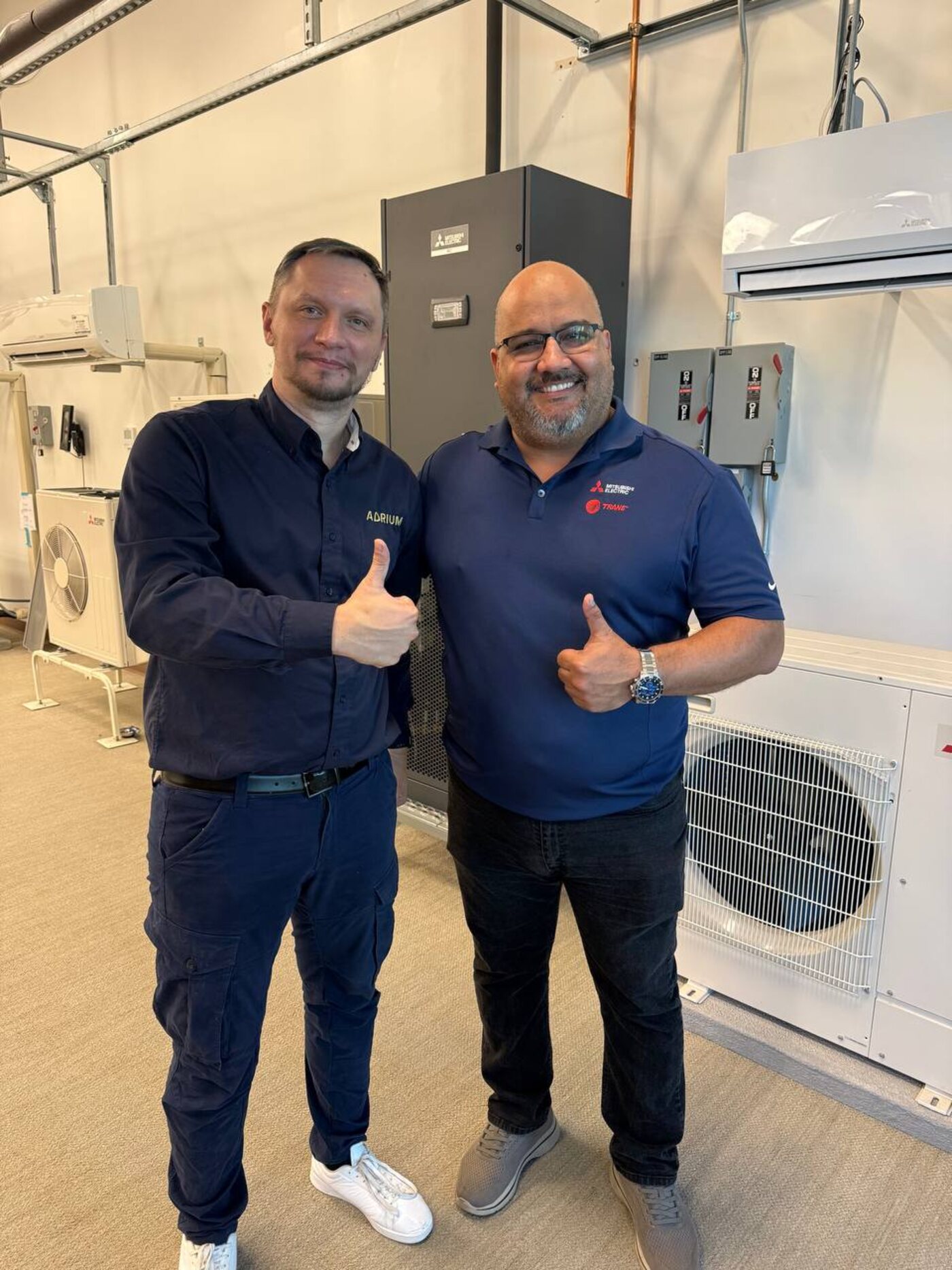
A Mitsubishi MXZ multi-zone setup runs several indoor heads off one outdoor unit. When everything works, it’s a clean way to heat and cool a whole house room by room. So it throws people off when one bedroom goes cold (or warm) while the living room, office, and everywhere else keep doing their job just fine.
Here’s the short version. If the rest of your zones are working, the outdoor unit is running. That single dead room is almost always a local problem at that one head, not the condenser outside. Knowing that is what keeps you from spending big money on the wrong part.
Why one dead zone points away from the outdoor unit
Think about what the outdoor unit does. It runs the compressor and moves refrigerant out to all the indoor heads at once. If that outdoor unit had quit, or the compressor failed, you wouldn’t lose one room. You’d lose all of them. Every zone would go down together.
So when three zones heat fine and the fourth does nothing, logic walks you straight past the condenser. The shared part is clearly working. The thing that’s different about the dead room is the stuff that belongs only to that room: its indoor unit, its sensors, its refrigerant port on the branch, and the wiring that ties that one head back to the outdoor unit.
That’s the whole reason a real diagnosis goes zone by zone instead of jumping to “you need a new system.”
What usually causes a single zone to drop out
A few things come up again and again on these. None of them require a new condenser.
- The indoor unit’s control board. Each head has its own board. If that board fails or faults, that room goes quiet while the others run normally.
- A sensor or thermistor. Mitsubishi indoor units rely on temperature sensors to know when to call for heat or cool and to protect themselves. A sensor reading out of range can park that zone in a fault and shut it down.
- The expansion device at that port. On a multi-zone, refrigerant flow to each head is metered. If the metering at one zone sticks or fails, that room can stop heating or cooling even though refrigerant is reaching everyone else.
- Wiring or a comms fault on that line. Each indoor head talks to the outdoor unit. A loose connection, a chewed wire, or a communication error on that single run can knock out one zone and leave the rest fine.
- Simple stuff first. A filthy filter, a unit set to the wrong mode, a tripped breaker feeding just that head, or something blocking the indoor coil. Always worth ruling out before anything fancy.
Notice that every item on that list lives at or near the one room that’s down. That’s the pattern.
How a proper diagnosis actually works
We don’t guess on these, and you shouldn’t accept a guess either. Mitsubishi units store fault codes that flag where the trouble is, like a sensor out of range or a lost connection on a specific zone. Reading that code is step one. It points us at the right zone and the right subsystem instead of swapping parts and hoping.
From there it’s the methodical stuff. Confirm the other zones really are working (that tells us the outdoor unit and shared components are good). Check that the dead head has power and is calling for heat or cool. Read the sensors and compare them to Mitsubishi’s service data. Verify refrigerant is actually flowing to that port. Inspect the comms wiring on that line. Each check rules something in or out until we land on the actual failed part.
On Hyper-Heat and H2i cold-climate systems there’s an extra wrinkle worth mentioning. In cold weather a heat pump runs defrost cycles, and during a defrost it can pause heating for a bit. That’s normal behavior, not a failure. A good tech knows the difference between a unit in defrost and a zone that’s genuinely down, so you don’t pay to “fix” something that was working as designed.
Don’t get sold a condenser for a small part
This is the part to remember. If someone looks at one dead room on a multi-zone system and tells you the fix is a brand-new outdoor unit, ask them why the other zones still work. A new condenser is one of the most expensive things you can buy for a ductless system. Replacing it to cure a bad sensor or a faulted indoor board is a mismatch between the problem and the price.
A board, a sensor, or a wiring repair is a fraction of that cost. The honest move is to find the failed part on the zone that’s down and fix that.
How we handle it
We’re factory-trained on Mitsubishi M- and P-Series. We completed Mitsubishi Electric’s M- and P-Series Essentials in Sacramento in May 2026 and the Advanced M- and P-Series Service training at their Los Angeles factory training center in June 2026, so we know how these multi-zone systems are supposed to behave and how to read them.
Our diagnostic is $99, and we credit it toward the repair if you go ahead with us. You get a written estimate before any work starts. If a repair makes sense, we repair it. If you’re weighing a full system replacement down the road, new HVAC installs from us carry a 10-year parts warranty plus a labor warranty (2 years standard, extended to 10 years with our maintenance plan), but that’s a separate conversation from fixing one zone that quit.
Bay Area HVAC Service is the HVAC division of ADRIUM Service Solutions, based in San Ramon. We’re licensed (CSLB #1136642) and EPA 608 certified. If one room on your Mitsubishi multi-zone has gone quiet, give us a call and we’ll diagnose the zone that’s actually down.
Key takeaways
- If one zone is dead but the others heat and cool normally, the shared outdoor unit is almost certainly fine. The fault is local to that head or its controls.
- Common single-zone causes are the indoor unit's control board, a thermistor or sensor, a stuck or failed expansion device at that port, or a wiring or comms fault on that one line.
- A proper diagnosis works zone by zone and reads the fault code, not a guess. You should not be sold a whole new condenser to fix one room.
- We're factory-trained on Mitsubishi M- and P-Series. Our $99 diagnostic is credited toward the repair and you get a written estimate first.
Related questions
If one zone stops working, do I need a new outdoor unit?
Can I diagnose which part failed myself?
What is a fault or error code on a Mitsubishi system?
How much does the diagnostic cost?
Are you a Mitsubishi Diamond Contractor?
Need help with your system? Call (925) 999-4095 or book a visit. Repair diagnostics are $99, credited toward the repair. Installation assessments are free.
Further reading
Need HVAC help in the Bay Area?
We serve 56 cities. Same or next day when we can.
Bay Area · 7am–7pm · 7 days · no overtime charges