
The standard HVAC labor warranty in the Bay Area is 1-2 years. We write 2 years standard, and extend it to a full 10 if you keep our maintenance plan active. This post is the long-form answer to a question we get during quotes: “Why are you offering that?”
The math behind the warranty
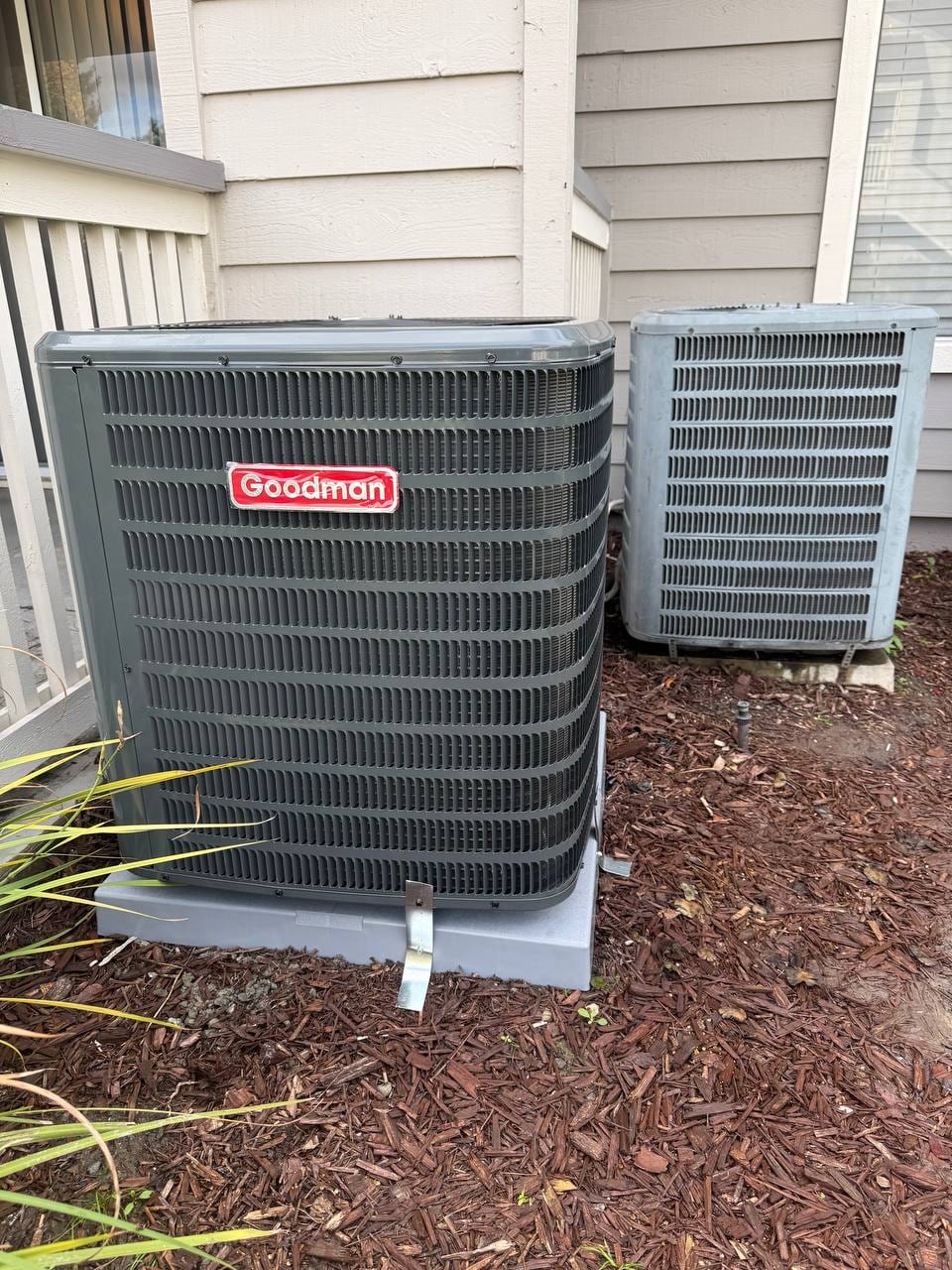
A 10-year manufacturer parts warranty is standard on most modern HVAC equipment (see Daikin’s warranty terms and Goodman’s product registration page). Compressors, heat exchangers, control boards: if the major components fail inside that window, the manufacturer ships a replacement. The contractor passes that through at no parts cost. So when a shop tells you “10 years on parts,” they’re describing what the manufacturer requires them to honor anyway.
Labor is different. Labor is the contractor’s actual financial exposure. Every time we come out under warranty, diagnose the failure, remove the bad component, install the replacement, recharge the refrigerant, leak-test, we eat the cost. There’s no manufacturer reimbursement for the labor side.
That’s why most shops cap labor at 1-2 years. The longer the labor warranty, the higher the contractor’s stack of future service-call obligations. A shop that bids 500 installs a year and writes 10-year labor on each one is committed to honoring those calls for a decade. That’s a real liability on the books.
What keeps the labor warranty at 10 years
The 10-year labor term isn’t automatic. It’s tied to our maintenance plan: two visits a year, $290 each. Every visit includes a new filter, a full diagnostic, and a system cleaning. Keep both visits current and the labor warranty runs the full decade. Let the plan lapse and labor coverage steps back down to the standard 2 years for anything that happens after that point. It’s the same logic manufacturers use when they require registered maintenance to keep an extended parts warranty in force, we’re applying it to labor.
Why we write 10 years anyway
Two reasons, and they’re connected.
First: when you commit to 10 years of labor coverage on a system, you cannot afford to install it sloppy. Every shortcut you’d otherwise take, skip the proper refrigerant vacuum, reuse the old condenser pad, leave the duct joints with whatever seal-tape the previous installer used, undersize the disconnect, skip the surge protector, comes back as a warranty service call. The install has to be done right because we’re the ones who’ll be paying to fix it if it’s not.
So the warranty isn’t really a marketing offer. It’s an internal constraint that forces install quality up across the whole job. The customer benefit is the warranty itself; the operational consequence is better installs because we have skin in the game.
Second: the install that pays the contractor twice, once for the install and once for the warranty service calls, is a customer experience disaster regardless of the warranty terms. We’d rather take the time to do the install correctly the first time. The 10-year warranty is what makes that financially obvious to the install crew.
What this looks like in practice
When you get a quote from us, you’ll see line items that some bidders leave out. Refrigerant vacuum-pull to manufacturer spec instead of “feels right.” New disconnect box and whip with surge protection. New condenser pad. Duct joint sealing at the air handler connection. Updated electrical if the existing panel work doesn’t meet code. New shutoff valves on gas-side appliances.
Each of those is a place where a cheaper bid will cut the corner. Each of those is also a place where the corner-cutting shows up as a warranty service call 18 months later. We include them in the quote because we’d rather be transparent about the install scope than win the job on a price that becomes a problem.
What to ask any HVAC bidder
When you’re collecting quotes, ask for the labor-warranty length in writing. Not the verbal answer: the contract language. The number on the contract tells you more about how the installer thinks about quality than any star rating or testimonial.
If the answer is “1 year,” that’s the industry baseline. You’re paying for the install and accepting that any post-install service work is on you. If the answer is “2 years,” that’s slightly above baseline. If the answer is “5 years,” that’s notable. If the answer is “10 years parts, plus labor that runs 2 years standard and extends to 10 with an active maintenance plan, in writing,” you’ve found a contractor who’s structurally committed to install quality because they know they may be on the hook for a decade of labor.
That commitment changes what gets done during the install. Which is the point.
Key takeaways
- The standard Bay Area HVAC labor warranty is 1-2 years. Bay Area HVAC Service writes 2 years standard, extended to 10 with an active maintenance plan.
- A 10-year labor warranty, kept in force by the maintenance plan, changes how the install gets done, you can't sloppy-install a system you might have to come back and fix for free for a decade.
- Manufacturer parts warranty is industry-standard 10 years on most modern equipment; it costs the installer nothing to pass through.
- Labor is where the contractor's actual financial exposure lives. Most shops cap it short to keep their service-call P&L predictable.
- Ask any HVAC bidder for the labor-warranty length in writing. The number tells you more about installation quality than any star rating.
Related questions
What's actually covered under the 10-year labor warranty?
What does the maintenance plan cost, and what's included?
If the warranty is so good, what's the catch?
What if the equipment itself fails after the manufacturer parts warranty ends?
Why don't more shops offer this?
Does the labor warranty transfer if I sell the house?
Need help with your system? Call (925) 999-4095 or book a visit. Repair diagnostics are $99, credited toward the repair. Installation assessments are free.
Further reading
Need HVAC help in the Bay Area?
We serve 56 cities. Same or next day when we can.
Bay Area · 7am–7pm · 7 days · no overtime charges