
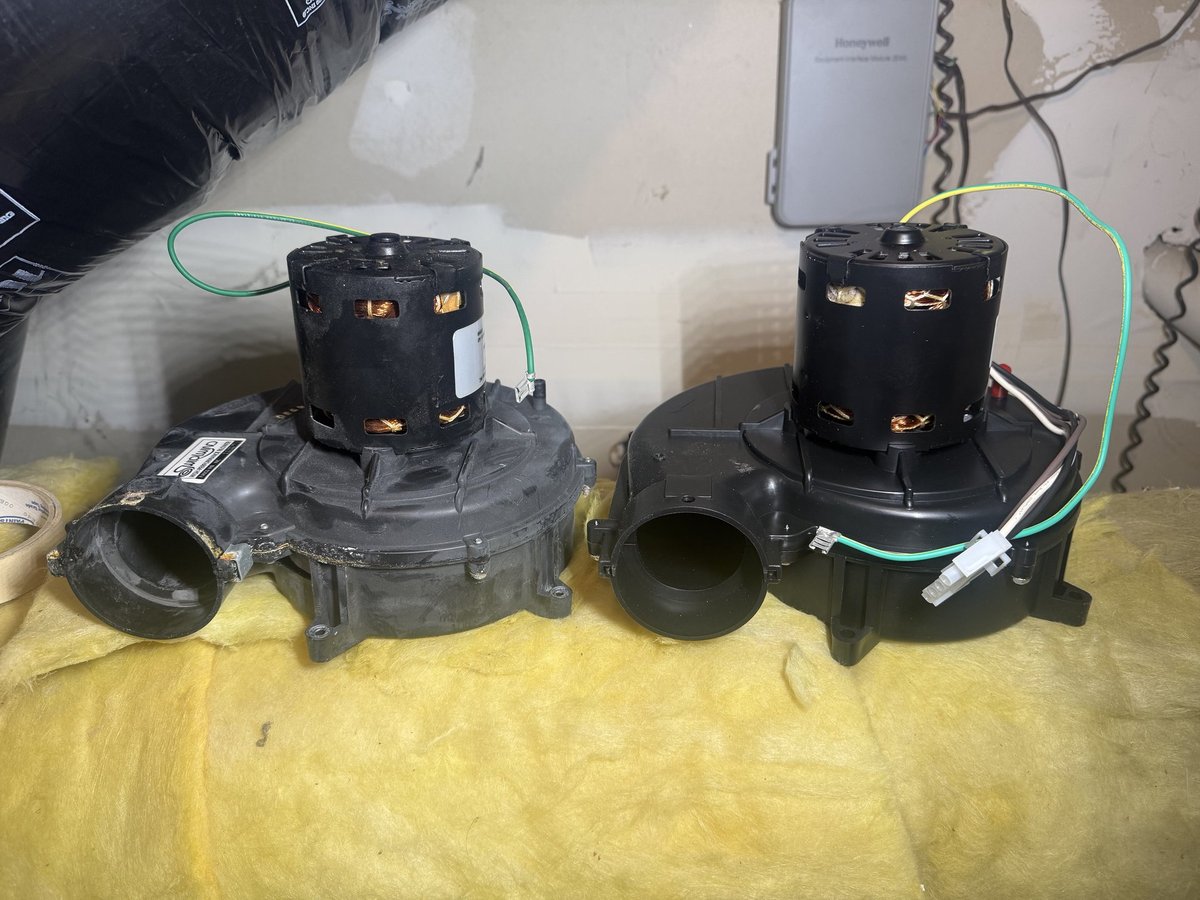
The most expensive HVAC repair I quote is the one we could have caught six months earlier. A capacitor that fails in July when the AC is needed and a tech costs more than off-season; a heat exchanger crack found at first-fire in December that means a system shutdown until replacement. These aren’t dramatic on the day we find them during routine maintenance. They become emergencies when we don’t.
The warranty piece
Most modern HVAC manufacturer warranties (Daikin, Carrier, Lennox, Trane, Mitsubishi, Goodman) include language requiring documented annual professional maintenance to keep the parts warranty in force. The exact wording varies; the practical effect is the same. Without maintenance records, a compressor failure in year 7 can be denied, and the homeowner pays the $2,500 to $4,500 out-of-pocket for the replacement.
The plan pays for itself one time on one denied warranty claim. After that, every prevented failure is a clean win.
What a real tune-up actually measures
A real tune-up is not a 25-point checklist with a clipboard. Here’s what we actually do:
Cooling side (spring visit):
- Connect manifold gauges to suction and liquid line service ports. Read pressures. Calculate superheat (suction side) and subcooling (liquid side). Compare against manufacturer-published values for the operating conditions. Off-spec readings indicate refrigerant charge issues, restriction, or compressor problems.
- Measure capacitor capacitance against rated value. Capacitors degrade gradually; a 35-microfarad capacitor reading 28 will work but is on borrowed time. Catch it now, replace for $150 to $250 in shoulder season instead of $250 to $400 emergency service in July.
- Test contactor for pitting. Pitted contactors arc on startup and accelerate compressor wear.
- Check blower motor amperage against rated. Motor drawing higher amps is on the way out.
- Inspect evaporator coil for dust buildup. Light buildup is normal year-over-year; heavy buildup needs cleaning ($200 to $400).
- Clear condensate drain line, test flow.
- Test thermostat calibration against an independent thermometer.
Heating side (fall visit):
- Run combustion analysis on gas furnaces. CO levels in flue gas tell us how the combustion is performing. Excess CO is a safety concern.
- Inspect heat exchanger for cracks. Critical safety check on systems past 15 years.
- Test flame sensor millivolts. Sensor with carbon buildup will eventually fail to detect flame and shut the furnace down.
- Check ignitor resistance against spec.
- Verify draft inducer operation.
- Test gas pressure (manifold and supply).
- Check all safety controls (limit switch, pressure switch, rollout switch).
Both visits:
- Static pressure measurement across the air handler. Static creep year-over-year indicates duct or coil issues.
- Filter replacement.
- Log all readings into the customer’s history file.
Why year-over-year logs matter more than single readings
A capacitor reading 33 microfarads when rated for 35 is technically within tolerance. Same reading next year at 31 is the same situation. But year-over-year trend from 35 → 33 → 31 → 29 → 27 is a capacitor about to fail, visible on the curve even though no individual reading triggers a “replace now” recommendation.
Same logic applies to superheat/subcooling drift, blower amperage, and static pressure. Single-point measurements catch obvious problems. Trend lines catch developing problems.
We log every reading so the next visit’s tech (or me) sees what’s changed and what’s stable.
When the plan doesn’t make sense
We don’t push the plan on every customer:
- System under 4 years old that we installed. Commissioning gives a strong baseline and the manufacturer warranty is in its early years, so an annual visit is overkill; biennial is often fine.
- System past 18 years with replacement planned in the next year or two. Preventive maintenance hits diminishing returns there. We do straight diagnostic visits as needed.
- Vacation rental or rarely-used property. Less runtime, less wear, and an annual visit may be enough.
For everything else (most owner-occupied Bay Area homes with 5 to 15 year old equipment), the math works.
What’s in our plan
Ask for current plan pricing. Per-customer:
- Spring AC tune-up (60 to 90 min, all the readings above)
- Fall heating tune-up (60 to 90 min, all the heating-side readings)
- 15 percent off all repairs during the year
- Priority scheduling (booked before non-plan customers in peak season)
- Filter replacement included at each visit
- Year-over-year performance logs
- Transferable if you sell the home
- Documentation maintained for warranty claims
Related reading
- How often to change your HVAC air filter, Bay Area guide
- Repair or replace your HVAC, how I decide on the job
- Why is my AC freezing up? Five causes and what to do first
Key takeaways
- Most heat pump and high-efficiency AC warranties require documented annual professional maintenance.
- Skipping documentation can lead to denied claims on out-of-warranty repairs ($2,500 to $4,500 for a compressor).
- Tune-ups catch problems early: capacitor degradation, refrigerant leaks, condensate restrictions, ignitor wear.
- Bay Area homes do best with twice-yearly visits: spring AC tune-up + fall heating tune-up.
- Our plan includes both seasonal visits plus repair discounts and priority scheduling. Ask for current pricing.
Related questions
What does a real HVAC tune-up actually include?
Why twice yearly instead of once?
Will skipping maintenance really void my warranty?
What problems get caught early?
When does the plan NOT make sense?
Need help with your system? Call (925) 999-4095 or book a visit. Repair diagnostics are $99, credited toward the repair. Installation assessments are free.
Further reading
Need HVAC help in the Bay Area?
We serve 56 cities. Same or next day when we can.
Bay Area · 7am–7pm · 7 days · no overtime charges