
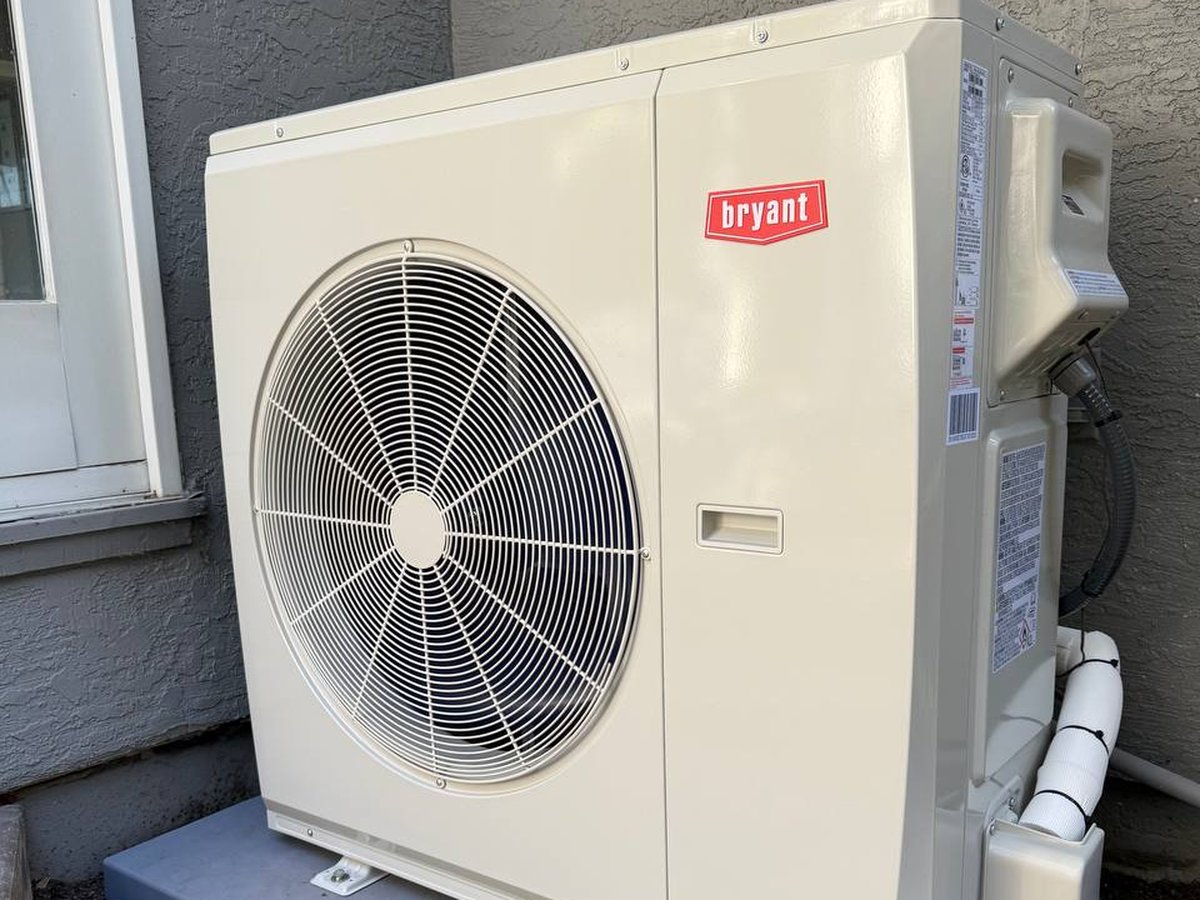
Why Bay Area climate works for heat pumps
Bay Area winters are mild. Inland Tri-Valley cities like Danville and San Ramon rarely see overnight lows below 35°F. Coastal cities stay warmer. Modern variable-speed heat pumps deliver full rated capacity down to about 0°F and continue working below that, so in our climate the efficiency advantage over a gas furnace is fully realized. There’s no significant capacity loss in winter to argue around.
The mechanical difference
A gas furnace burns fuel to make heat. A heat pump moves heat: from outside air into your home in winter, from inside air to outside in summer. One system covers both seasons. The efficiency math shows up on the PG&E bill. Heat pumps deliver 2 to 4 units of heat per unit of electricity consumed. Gas furnaces deliver less than 1 unit of heat per unit of fuel energy.
What 2026 rebates actually look like
The 2024-era rebate stack has shrunk. Federal Section 25C expired December 31, 2025. Tech Clean California reached its funding cap and stopped accepting new applications November 14, 2025. Our full rebate guide has the closure timeline.
What we work with in 2026: BayREN heat pump cycles when funding is open, MCE Heat Pump HVAC for MCE customers, PG&E thermostat and seasonal ENERGY STAR rebates, EBCE/Ava additions in Alameda County, and manufacturer instant rebates that come off equipment cost. Eligibility and amounts vary by territory and program cycle. We confirm what’s currently paying when we write your estimate after checking equipment, household, contractor, and application requirements.
When a heat pump isn’t the right call
Three cases where we’d push back on heat pump conversion: no practical refrigerant line route through the house (rare in single-family construction), propane fuel with no path to upgrade electrical service, and ductwork so degraded that ductless would actually be cleaner than retrofitting. We walk those cases through at the estimate. We don’t recommend heat pumps on every project just because they’re rebate-eligible.
Typical Bay Area install cost in 2026
Single-zone ductless mini-split: $5,500 to $9,000 before rebates; $4,500 to $8,000 after manufacturer instant rebate.
Whole-home 4-ton ducted heat pump: $14,000 to $15,500 before rebates. Out-of-pocket depends on which programs are open in your territory at the time of install. That’s the figure we put on your written estimate after we check current eligibility.
What to ask your contractor
Factory training matters more on heat pumps than on conventional AC. Variable-speed inverters, R-454B charging procedure, and refrigerant subcooling all behave differently than the gas-furnace-and-AC playbook some installers learned on. Ask whether the contractor performs a Manual J load calculation. If they don’t, walk away. Oversized heat pumps short-cycle, run rough on humidity, and wear out faster. Oversizing is the most common installer mistake.
Key takeaways
- Bay Area winters rarely hit freezing, so heat pumps stay in their efficient range almost year-round.
- We work with BayREN, MCE, PG&E, EBCE/Ava, and manufacturer instant rebates. Eligibility and amounts vary. We confirm at quote time.
- Federal 25C is gone. Tech Clean California is on waitlist.
- Replace if your existing furnace is 15-plus years old or holds phased-out refrigerant.
- Homes without ductwork are usually better served by ductless mini-split than ducted retrofit.
- Whole-home 4-ton ducted install runs roughly $14,000 to $15,500 before rebates.
Related questions
Is a heat pump right for my Bay Area home?
What rebates am I eligible for?
How does a heat pump handle cold Bay Area nights?
When does a heat pump NOT make sense?
Need help with your system? Call (925) 999-4095 or book a visit. Repair diagnostics are $99, credited toward the repair. Installation assessments are free.
Further reading
Need HVAC help in the Bay Area?
We serve 56 cities. Same or next day when we can.
Bay Area · 7am–7pm · 7 days · no overtime charges